
Cylinder, Concentrator or Plant: The Supply Decision Behind Hypoxaemic Pneumonia Deaths
Roughly a third of children admitted with pneumonia in low- and middle-income countries are hypoxaemic, and low oxygen saturation multiplies their odds of death about five-fold. Trials from Nigeria and Uganda, an Ethiopian plant programme and Indian field reviews show that how a hospital sources its oxygen decides whether that treatment exists at the bedside.
A verbal autopsy for a child who died of pneumonia usually reads the same way. Cough for several days, then fast breathing, then the chest pulling in with each breath, then a journey to a facility that took too long or ended too soon. The interview captures the illness well. What it cannot capture is the measurement nobody took at the bedside, or the oxygen the ward did not have that day. For a large share of these deaths, that missing measurement and that missing gas are the difference between a recorded cause of death and a discharge.
This piece looks at the second half of that problem: not whether children need oxygen, which the evidence settled long ago, but how a hospital in a low-resource setting actually gets it, and what the trials and programme evaluations say about each route.
How many children need it
The best current estimate comes from a 2022 systematic review and meta-analysis in The Lancet Global Health that pooled 57 studies covering more than 100,000 children with pneumonia in low- and middle-income countries. Hypoxaemia was present in 31% of children with WHO-classified pneumonia overall, in 41% of those with severe or very severe pneumonia, and in 8% of those with non-severe pneumonia. Combining those prevalence figures with hospitalisation data, the authors estimated that more than 7 million children were admitted to hospital with hypoxaemic pneumonia in 2019.
Low oxygen saturation is not a marker of severity alone; it is one of the strongest predictors of who dies. An earlier meta-analysis of 12 studies and 13,936 children found that an oxygen saturation below 90% was associated with 5.47 times the odds of death from acute lower respiratory infection (95% CI 3.93–7.63). A broader 2025 review of 213 studies and 601,757 patients of all ages put hypoxaemia at 24.5% of admitted neonates, 12.1% of admitted children and 10.8% of admitted adults, and found 4.84 times higher odds of death among hypoxaemic patients compared with those who were not.
Those numbers are why the Lancet Global Health Commission on medical oxygen security, discussed in our earlier piece on the oxygen gap from a mortality desk, treats oxygen as a system problem rather than a commodity. The Commission estimated that more than five billion people lack access to safe, affordable medical oxygen and that pulse oximetry was performed for only 19% of patients presenting to general hospitals in low- and middle-income countries.
Four ways to put oxygen in a ward
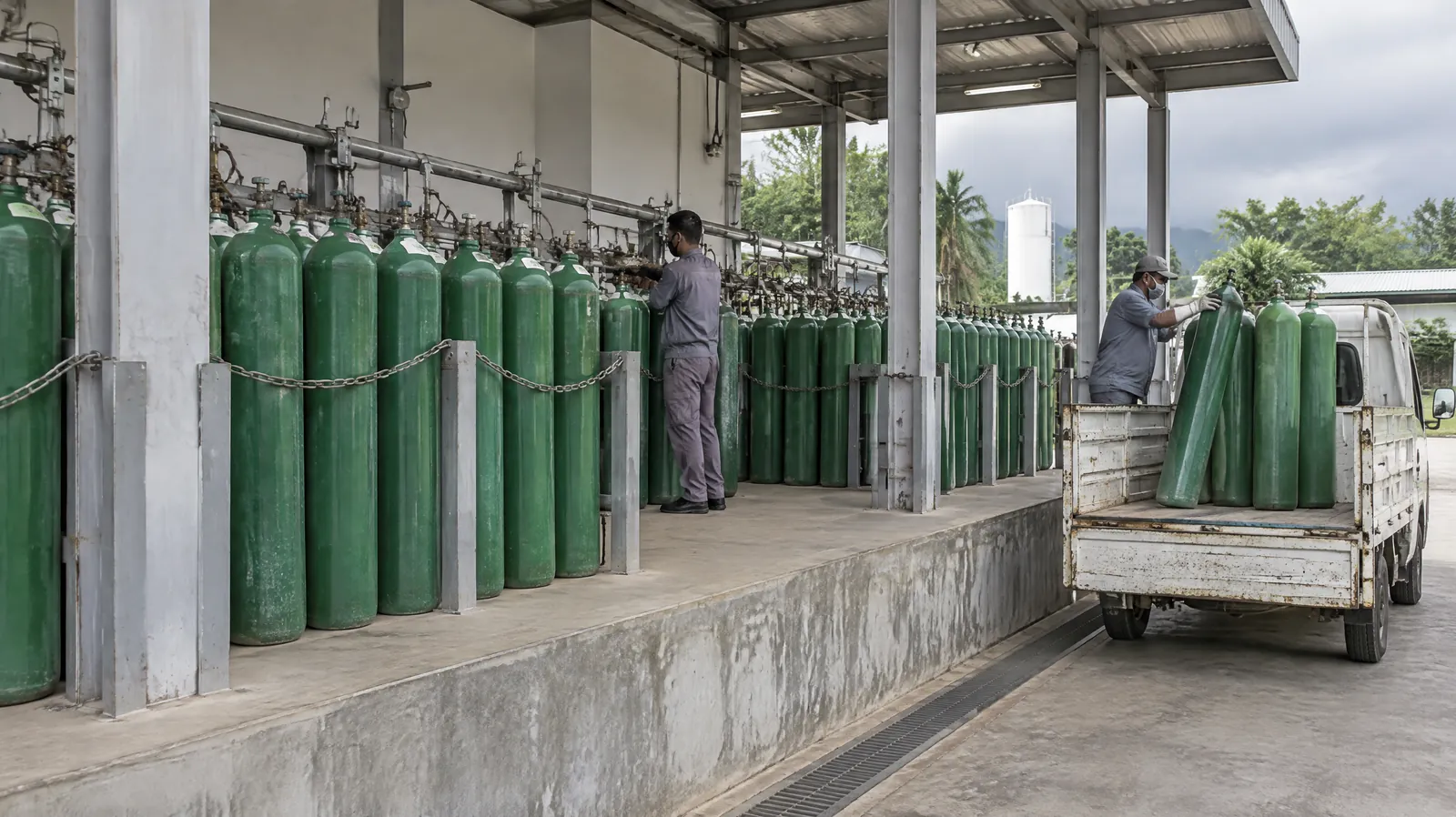
A district hospital that wants oxygen at the bedside has four basic options, and each one fails in a different way. The comparison below draws on the field reference maintained by Open Critical Care and on WHO’s technical specifications for oxygen concentrators.
| Source | Typical cost | Power | Output | Main failure point |
|---|---|---|---|---|
| Cylinders | About US$60–250 per “J” cylinder; US$25–100 per refill, plus transport | None | 100–10,000 litres per cylinder | Supply chain: refills, trucks, distance to a filling station |
| Concentrators | About US$500–2,000 per unit | 350–600 W, continuously | Typically 3–10 litres per minute | Electricity and routine maintenance (filters, humidifiers) |
| PSA plants | High installation cost, low running cost | About 1.2 kWh per cubic metre | 0.5–200 cubic metres per hour | Skilled technicians, steady power, distribution |
| Liquid oxygen | Storage systems about US$10,000–100,000; annual maintenance up to 40% of capital | Needed for safety systems | 150–20,000 litres per minute | Proximity to an air-separation plant; poor value at low demand |
WHO’s specifications set the quality floor for concentrators: at maximum rated flow they should still deliver more than 82% oxygen at 40°C and 95% relative humidity, which matters in exactly the hot, humid wards where they are most needed. A concentrator that meets that standard on paper and runs off an unstable grid is, in practice, a cylinder-dependent ward with an expensive box in the corner.
What happened when hospitals got more than a box
The most instructive trial is also the least flattering to the “just add equipment” view. A stepped-wedge cluster-randomised trial in 12 Nigerian hospitals introduced pulse oximetry first and then a full, multifaceted oxygen system, and followed 7,716 neonates and 17,143 children through both periods.
Introducing pulse oximetry improved oxygen practices, and the authors concluded it may have reduced mortality from acute lower respiratory infection. Adding the full oxygen system on top produced no additional benefit for children (adjusted odds ratio 1.06, 95% CI 0.77–1.46). For neonates the full-system period was associated with higher odds of death compared with the pulse-oximetry period (adjusted odds ratio 1.45, 95% CI 1.04–2.00), a finding the authors asked readers to interpret carefully because Nigeria was in an economic recession during the same years.
The lesson most programme staff draw from it is not that oxygen equipment does nothing. It is that the measurement comes first. A ward that can see a saturation of 84% on a screen uses whatever oxygen it has more effectively than a ward with new equipment and no reliable way to decide who needs it.
The Uganda result: power was the bottleneck
Uganda offered the clearest positive answer. In a pragmatic, country-wide stepped-wedge trial published in The Lancet in 2024, solar-powered oxygen systems (photovoltaic panels, a battery bank and an oxygen concentrator) were installed sequentially at 20 rural health facilities. The trial enrolled 2,405 children with hypoxaemia, and its primary endpoint was death within 48 hours of hypoxaemia being detected.
The relative risk reduction was 48.7% (95% CI 8.5–71.5), which translates to treating 45 children with solar-powered oxygen to save one life. The accompanying economic analysis found the system cost-effective compared with no oxygen and cost-saving compared with fuel-powered generators.
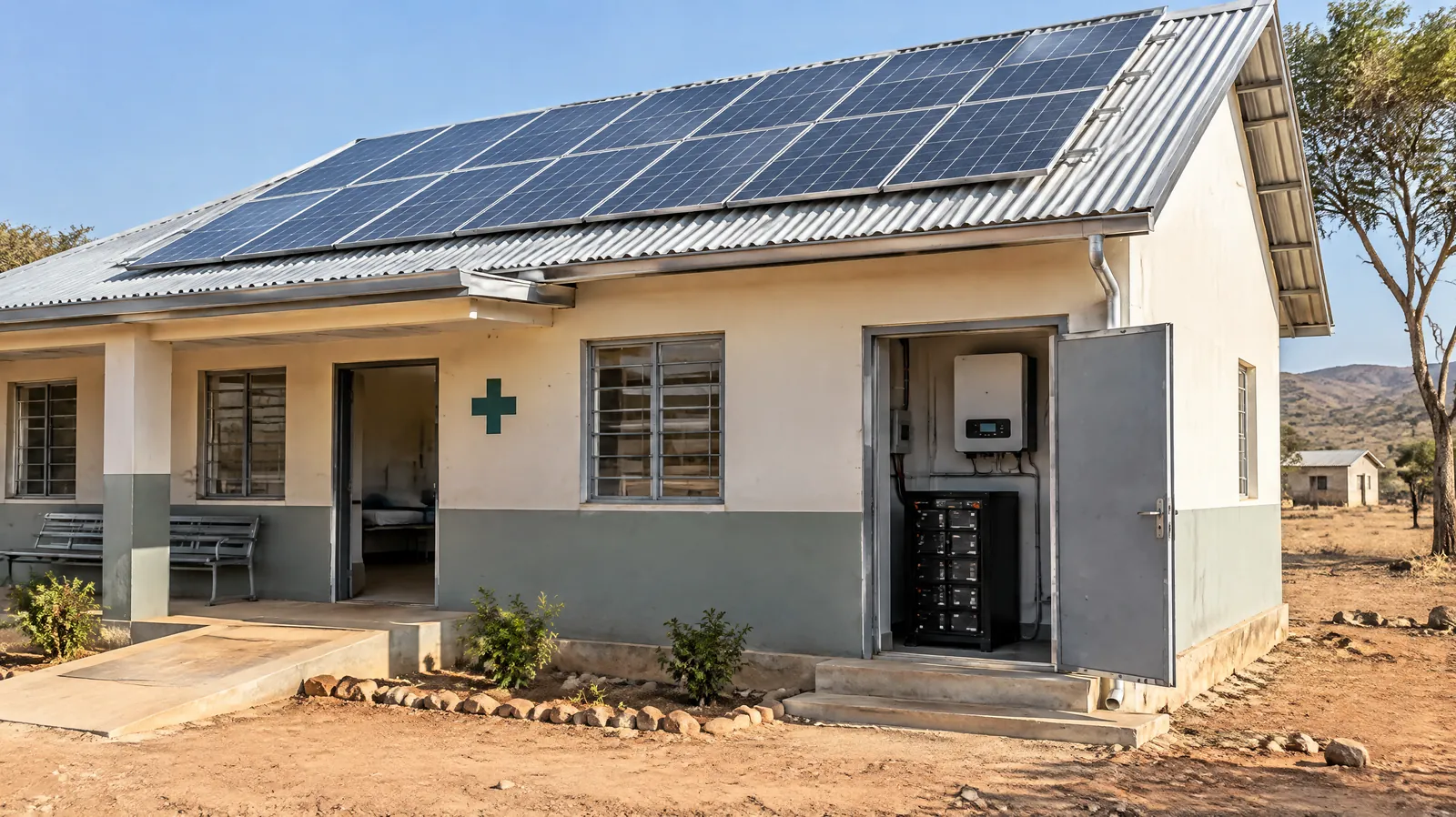
The design matters more than the hardware. Concentrators were already known to work; what the solar system removed was the dependence on a grid that drops out precisely in the facilities with the sickest children. It is a reminder that an oxygen intervention is often an electricity intervention in disguise.
Plants: cheap oxygen, expensive logistics
Pressure swing adsorption plants promise the lowest cost per cubic metre, and the numbers bear that out where they work. An Indian scoping review cites generation costs of roughly US$0.12–0.24 per cubic metre for PSA oxygen, against US$0.20–0.32 for liquid oxygen. It also records that many hospitals were unable to use plants that had been installed, citing unstable power, missed maintenance, a shortage of trained technicians and dusty environments that load the adsorbent beds.
Ethiopia’s Amhara region is the best-documented case of what happens next. Two PSA oxygen centres opened in 2019 under a programme with the regional health bureau, and a 2024 qualitative evaluation in Global Health: Science and Practice traced the effects. The price hospitals paid per filled cylinder fell from ETB 439 (about US$15.81, May 2018) to ETB 282 (about US$6.46, June 2021). The average distance to a filling point roughly halved, from about 200 km to just over 100 km, and average travel time fell from 17.6 hours to 6.4 hours. By 2021 one plant was supplying 60 facilities and the other 46.
And yet 11 of the 13 hospitals interviewed said their oxygen supply was still inadequate. They described trucks too small to carry enough cylinders per trip, and shortages of pulse oximeters, pressure gauges, regulators and single-use consumables that limited how much of the cheaper oxygen reached patients. The paper’s title states the conclusion: an oxygen supply is not enough.
What the evidence adds up to
Read together, the trials and evaluations point in one direction:
- Measure before you supply. Pulse oximetry changed practice in Nigeria even before any new oxygen source arrived. The Commission’s 19% figure suggests most hospitals are still flying blind.
- Pick the source that survives local failure modes. Cylinders fail on logistics, concentrators on power, plants on skills and distribution. The Uganda result came from solving the power problem, not from buying more concentrators.
- Budget for the last metre. Regulators, tubing, nasal cannulae and trained staff decide whether cheaper oxygen becomes treatment, as the Amhara hospitals reported.
- Count the outcome, not the equipment. Programmes that report concentrators delivered or plants commissioned are measuring inputs. Hypoxaemia detected, oxygen given and deaths within 48 hours are the numbers that matter.
Five questions a facility should be able to answer
Programme evaluations keep returning to the same blind spots. Before any procurement decision, a district hospital that wants to reduce hypoxaemic deaths should be able to answer five questions from its own records:
- How many admitted children had their oxygen saturation measured? If the answer is unknown, the Nigerian experience suggests the first investment is a working pulse oximeter on every paediatric ward and in triage, not a new oxygen source.
- On how many days last month was oxygen unavailable? Stock-outs of cylinders and power cuts that idle concentrators are rarely logged, yet they are the most direct measure of whether the chosen source works locally.
- How long does a refill take, door to door? The Amhara figures show that halving distance and travel time to a filling point was achievable, and that it still left most hospitals short.
- Who maintains the equipment, and with what budget? Concentrators need filter cleaning and humidifier care; plants need trained technicians. Equipment donated without a maintenance line tends to appear in assessments as installed but not functional.
- What happened to children who were hypoxaemic? Deaths within 48 hours of detection, the primary outcome of the Uganda trial, is a simple indicator a ward register can track without a research team.
None of these questions requires new technology. All of them turn oxygen from a line item into a measured service.
Why this belongs on a mortality desk
The cause-of-death statistics that verbal autopsy produces in places without civil registration are, among other things, a record of where these supply chains broke. A child coded as dying of pneumonia in a facility that had no working oximeter and an empty cylinder died of pneumonia; but the policy question hiding in that death is about logistics, electricity and maintenance budgets.
Post-discharge and community death reviews, such as those we covered in Sierra Leone, already ask what care a child received before dying. Adding a simple question about whether oxygen saturation was measured and whether oxygen was available would let mortality surveillance measure the oxygen gap directly, rather than inferring it from the size of the pneumonia fraction. The Commission’s call for oxygen to be treated as a health-system indicator would then rest on the same kind of data that drives every other cause-specific priority.
Sources
- Rahman AE, Hossain AT, Nair H, et al. Prevalence of hypoxaemia in children with pneumonia in low-income and middle-income countries: a systematic review and meta-analysis — The Lancet Global Health 10(3), 2022 pmc.ncbi.nlm.nih.gov
- Lazzerini M, Sonego M, Pellegrin MC. Hypoxaemia as a Mortality Risk Factor in Acute Lower Respiratory Infections in Children in Low and Middle-Income Countries: Systematic Review and Meta-Analysis — PLoS One, 2015 pmc.ncbi.nlm.nih.gov
- The prevalence of hypoxaemia in paediatric and adult patients in health-care facilities in low-income and middle-income countries: a systematic review and meta-analysis — The Lancet Global Health, 2025 pmc.ncbi.nlm.nih.gov
- Graham HR, King C, Rahman AE, et al. Reducing global inequities in medical oxygen access: the Lancet Global Health Commission on medical oxygen security — The Lancet Global Health, 2025 pmc.ncbi.nlm.nih.gov
- Graham HR, Bakare AA, Ayede AI, et al. Oxygen systems to improve clinical care and outcomes for children and neonates: A stepped-wedge cluster-randomised trial in Nigeria — PLoS Medicine 16(11), 2019 pmc.ncbi.nlm.nih.gov
- Solar-powered O2 delivery for the treatment of children with hypoxaemia in Uganda: a stepped-wedge, cluster randomised controlled trial — The Lancet, 2024 thelancet.com
- Smith V, Changoor A, Rummage S, et al. An Oxygen Supply Is Not Enough: A Qualitative Analysis of a Pressure Swing Adsorption Oxygen Plant Program in Ethiopian Hospitals — Global Health: Science and Practice 12(4), 2024 pmc.ncbi.nlm.nih.gov
- Effectiveness of pressure swing adsorption oxygen plants: A scoping review in Indian context, 2025 pmc.ncbi.nlm.nih.gov
- World Health Organization. WHO technical specifications for oxygen concentrators, 2015 who.int
- Open Critical Care. Overview of oxygen sources opencriticalcare.org